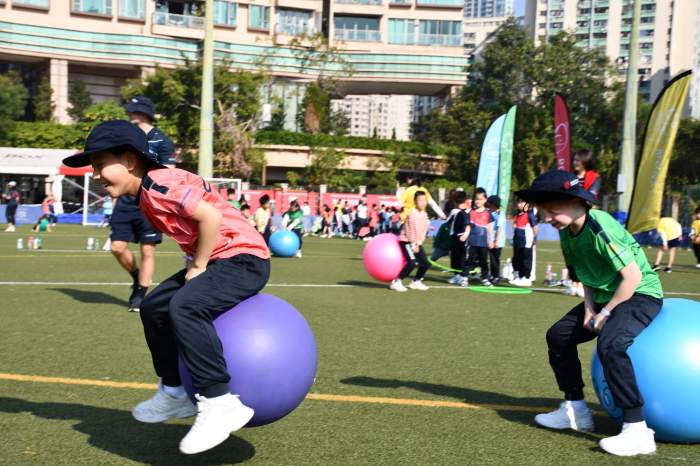
If you think back to the most valuable things you’ve learned in your life, chances are, very few of them came from sitting still and listening to someone talk. Most came from doing something, like making a mistake, figuring out a fix, working through a problem with other people, or stepping into an unfamiliar situation and coming out the other side.
Experiential learning is gaining serious traction among educators worldwide, and it’s not hard to see why. As the demands of university, careers, and daily life grow increasingly complex, schools that prioritize learning through doing are producing students who are not only more knowledgeable but also more adaptable, more confident, and better equipped to handle what comes next.
What Is Experiential Learning?
Experiential learning is an approach to education based on the idea that people learn most effectively through direct experience and reflection, not passive reception of information. Rooted in experiential learning theory, the model holds that students retain far more when they engage with real challenges, take action, and draw meaning from the process.
This framework comes from psychologist David Kolb, whose experiential learning theory describes learning as a repeating cycle. Kolb’s experiential learning cycle moves through four distinct stages, each building on the last:
| Stage | What It Involves |
|---|---|
| Concrete Experience | The student does something — takes part in an activity, project, or real-world task |
| Reflective Observation | The student pauses to think about what happened and what they noticed |
| Abstract Conceptualization | The student draws conclusions and forms new ideas based on that reflection |
| Active Experimentation | The student applies those ideas to a new situation, restarting the cycle |
What sets experiential learning apart from traditional instruction is the shift in agency. In a conventional classroom, the teacher holds and delivers knowledge. In an experiential one, the student constructs it through guided exploration, hands-on practice, and structured reflection.
Why Experiential Learning Leads to Deeper Understanding
Research consistently shows that active engagement produces stronger knowledge retention than passive listening. When students are physically and mentally involved in the learning process, the material connects to something real and felt, which makes it far more likely to stick.
What’s equally significant is what active engagement builds alongside knowledge. The skills students develop through experiential learning are the very competencies that universities and employers consistently rank among their top priorities:
- Communication: Working through real tasks requires students to articulate ideas, ask questions, and explain their reasoning clearly
- Collaboration: Group projects and shared challenges teach students how to contribute, negotiate, and support others
- Adaptability: When a plan doesn’t work, students learn to adjust rather than give up
- Problem-solving: Tackling open-ended challenges builds the habit of thinking through options as opposed to waiting to be given an answer
- Confidence: Successfully navigating unfamiliar situations grows a student’s belief in their own capability
Examples of Experiential Learning in Schools
In the Classroom: Projects, Simulations, and Labs
Some of the most powerful experiential learning activities happen without ever leaving the building. Science experiments invite students to test hypotheses and interpret real results. Design-thinking challenges ask them to identify a problem, prototype a solution, and iterate based on feedback. Mock trials place students in the roles of lawyers, judges, and witnesses, requiring them to research, persuade, and think on their feet simultaneously.
Cross-curricular projects are especially effective because they reflect how knowledge actually works in the real world:
| Example Project | Subjects Connected |
|---|---|
| Designing a sustainable city | Science, math, social studies, art |
| Running a student-led business | Math, language arts, economics |
| Producing a short documentary | History, media literacy, communication |
| Building a functional app prototype | Coding, design, problem-solving |
When a student sees that their geography lesson connects to their science unit, which relates to a real issue in their community, the learning stops feeling theoretical and starts becoming relevant.
Beyond the Classroom: Field Trips, Service Learning, and Outdoor Education
Experiential learning activities extend well beyond school walls. Community service projects put students in situations where their work has a tangible impact. Think planting community gardens, visiting care homes, or organizing donation drives. These experiences build empathy in tandem with academic skills.
Cultural immersion trips expose students to ways of life that challenge their assumptions and expand their frame of reference. Outdoor expeditions build resilience, teamwork, and decision-making in environments where those skills are genuinely tested, not just discussed. For older students, internships and mentorship opportunities with industry professionals provide a preview of the working world that no classroom simulation can fully replicate.
Across all of these settings, a few consistent outcomes tend to emerge:
- Students develop greater independence and self-awareness when navigating new environments
- Exposure to real communities and real challenges builds social responsibility as much as academic skills
- Unstructured or semi-structured experiences encourage creative thinking in ways that assigned tasks often don’t
- Working outside familiar surroundings strengthens relationships between students and teachers
Experiential Learning at Stamford American School Hong Kong
Few schools in Hong Kong build experiential learning into daily life as deliberately as Stamford. Programs across every year level are designed so that students regularly move between the theoretical and the applied, building knowledge through reflection and action in equal measure.
Outdoor Education: Learning Through Challenge and Adventure
The Outdoor Education program is a core part of our curriculum, running from Pre-Primary all the way through high school. Younger students in Pre-Primary to Grade 2 take part in half-day excursions each semester, visiting local ecological parks, beaches, and mountain trails where science scavenger hunts, wildlife cataloging, and interactive activities bring classroom concepts to life.
From Grade 3, students progress to overnight camps locally, with international options available from Grade 9 onward. Activities range from hiking and rock climbing to water sports and cultural exploration, with students also taking responsibility for practical camp tasks, such as meal preparation and site care.
Each trip is designed to push students outside their comfort zone in a structured, supported way, building independence, confidence, and social-emotional growth that carries back into the classroom.
The Cornerstones Program: Real-World Experience for High Schoolers
For Grade 9 and 10 students, the Cornerstones Program offers one of the most distinctive examples of experiential learning at the secondary level. Students undertake 15 hours of real-world project-based experience, working directly with industry experts across fields such as Data Science and AI, Filmmaking and Storytelling, Law and Legal, Global Sustainability Strategy, and more.
The program culminates in a showcased project each year, giving students tangible evidence of what they’ve built and learned. In the process, they develop leadership, teamwork, problem-solving, and communication skills — the same capabilities that Kolb’s experiential learning cycle places at the heart of meaningful learning. The experience also counts toward the Stamford high school diploma, reinforcing that real-world learning carries genuine academic weight.
STEMinn and Camp Asia: Innovation and Exploration Beyond the Bell
When it comes to the STEM space, our STEMinn program brings experiential learning through hands-on innovation projects spanning Pre-Primary to Grade 12. Students design, build, test, and refine, guided by real-world problems and the UN’s Sustainable Development Goals. Annual school-wide events like “Mission Inspire” and “Sustainable Stamford” give every student a chance to present and apply what they’ve created.
Outside of term time, Camp Asia holiday camps hosted at Stamford’s West Kowloon Campus offer children aged 8–14 a rich range of hands-on programs on coding, filmmaking, robotics, art and design, and more. These camps extend the spirit of experiential learning into the holidays, keeping students engaged, curious, and active long after the school day ends.
Ready to Put Experiential Learning to Work for Your Child?
Learning by doing leaves a mark that passive instruction rarely does. The experiences students have outside a textbook, including the challenges they navigate, the projects they complete, and the moments they surprise themselves, shape who they become as thinkers and as people.
The programs here at Stamford American School Hong Kong are proof that this kind of education is achievable every day, not just occasionally. Discover what hands-on learning looks like in practice and connect with our admissions team today to start the conversation about what the right fit looks like for your child.