
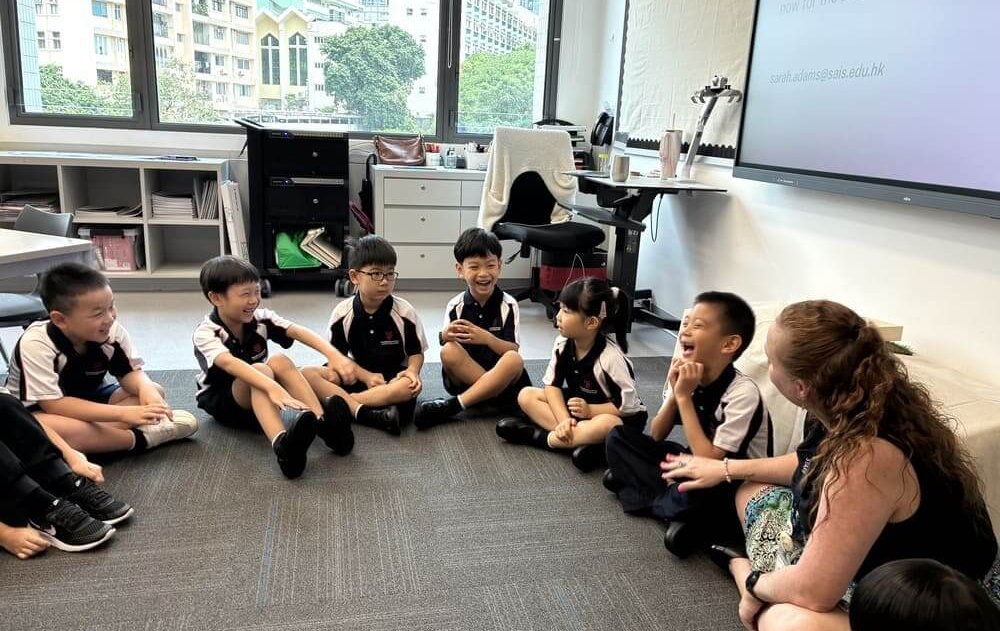
Children experience big emotions. Excitement, frustration, disappointment, anger and worry can all feel overwhelming, particularly when a child has not yet developed the skills to manage those feelings independently.
Learning self-regulation does not mean expecting children never to become upset. It means gradually helping them respond to everyday situations in ways that support themselves and others.
These skills develop over time and can play an important role in children‘s learning, relationships and well-being.
What Is Self-Regulation?
Self-regulation in children is the developing ability to manage internal experiences and responses according to the situation. It helps children gradually become more aware of their experiences and make appropriate choices.
Emotional, behavioral and cognitive self-regulation
Self-regulation in children can involve several connected areas.
- Emotional self-regulation is the ability to recognize and manage feelings.
- Behavioral self-regulation involves managing actions and responses, such as waiting for a turn or following a classroom routine.
- Cognitive self-regulation involves managing attention, thoughts and learning behaviors.
These areas are interconnected and develop at different rates. A young child may need considerable adult support, while an older child may increasingly use strategies independently.
Self-regulation vs self-control
Self-regulation is broader than self-control. Self-control is often associated with stopping or resisting an immediate impulse. Self-regulation also involves recognizing what is happening internally and deciding how to respond appropriately. For example, a child who is angry may learn to notice the feeling, identify the trigger, pause and choose a way to communicate rather than simply being told to “control” their anger.
Why Self-Regulation Matters
Developing self-regulation skills can help children manage the everyday demands of growing up and gradually become more independent. These skills can influence how children respond to situations that require patience, flexibility and appropriate decision-making.
As children become more capable of self-regulation, they can gradually take greater responsibility for how they respond to challenges and interact with those around them.
Links to learning, friendships and well-being
Self-regulation can support children’s participation in different aspects of daily life. In the classroom, it may help a student focus, manage frustration and persist with a difficult task.
With peers, it can help children listen, negotiate disagreements and consider another person’s perspective.
At home, it can help children manage transitions, disappointment and everyday routines.
Developing self-regulation can therefore support not only emotional well-being but also the skills children use to learn, communicate and build relationships.
How self-regulation develops with age
Self-regulation develops over time. Young children generally rely more heavily on adults to help them regulate. As their brains, language and social understanding develop, they can gradually take greater responsibility.
This means expectations should be age-appropriate. A four-year-old who needs help calming down is not necessarily demonstrating poor behavior. They may still be learning the skills required to manage strong emotions.
From Co-Regulation to Self-Regulation
Children gradually become more independent in managing their emotions and behavior, but they often need support along the way. Responsive relationships give children opportunities to observe, practice and develop the skills they will eventually use on their own.
Co-regulation is an important part of this developmental process, helping children move from relying heavily on adults toward greater independence in self-regulation.
The adult’s role in modeling and scaffolding
Children learn self-regulation partly through relationships with responsive adults.
Co-regulation occurs when an adult helps a child manage an emotional or behavioral situation. This might mean staying calm, naming what is happening and helping the child choose a strategy.
Over time, repeated experiences of co-regulation can help children develop their own internal strategies.
Stamford’s social-emotional learning approach emphasizes the importance of helping children name emotions, develop self-awareness and model healthy emotional regulation.
Strategies to Build Self-Regulation
Children can gradually build a personal toolkit of self-regulation strategies to draw on in different situations. The most useful approaches may vary depending on the child’s age, temperament and needs.
Rather than expecting one strategy to work in every situation, parents and teachers can give children opportunities to explore different approaches and discover what helps them respond effectively.
Naming and understanding emotions
Children cannot always regulate feelings they cannot identify.
Use simple language:
- “You look frustrated.”
- “You are disappointed because the game ended.”
- “You seem worried about tomorrow.”
Naming the emotion does not mean agreeing with every behavior. It simply helps children understand what they are experiencing.
As children become more familiar with different emotions, they may find it easier to recognize what they need and choose an appropriate self-regulation strategy.
Calm-down techniques and predictable routines
Different children respond to different strategies.
Useful options include:
- Slow breathing.
- Taking a short, quiet break.
- Counting slowly.
- Stretching or movement.
- Listening to calming music.
- Drawing or writing about a feeling.
- Talking with a trusted adult.
Predictable routines can also reduce unnecessary stress because children know what to expect. Over time, practicing these techniques when children are calm can make it easier for them to use them during more challenging situations. Parents can also explore mindfulness techniques for students as another way to foster calm, focused responses.
Self-regulation activities for different ages
Self-regulation activities for kids can be adapted to children’s developmental stages.
- For younger children, try games involving stopping and starting, such as “Simon Says.”
- For elementary children, practice breathing exercises, emotion charades, or simple problem-solving scenarios.
- Older children can identify their own triggers and create personal plans for responding to stressful situations.
These activities give children opportunities to practice self-regulation in manageable situations before they need to apply the skills during a more difficult moment.
When a Child Struggles to Self-Regulate
Difficulty with self-regulation is a normal part of childhood development, and occasional challenges do not necessarily indicate a larger problem. Children may need different levels of support as they develop these skills.
Understanding that regulation can be affected by a range of circumstances can help parents respond with patience while considering what support is appropriate for their child’s age and needs.
Everyday triggers and how to respond
Common triggers may include tiredness, hunger, transitions, sensory overload, disappointment, conflict or unexpected changes.
Rather than immediately asking, “Why are you behaving like this?”, consider what happened before the behavior.
Then help the child return to a calmer state before discussing what happened.
Parents can also consider how setting appropriate screen time limits may support predictable routines and reduce potential sources of conflict.
Once the child is ready, you can talk about what they were feeling, what triggered the response and which self-regulation strategies might help next time.
For some children, transitions can be particularly challenging. Parents may find guidance on helping children with separation anxiety useful when preparing children for situations involving separation or changes in routine.
When to seek additional support
Every child has difficult days. However, if emotional or behavioral difficulties are persistent, severe, or significantly affecting school, relationships, or everyday life, parents may wish to speak with the child’s teacher, counselor, or an appropriate professional.
The goal is not to label a child. It is to understand what support may help.
Supporting Self-Regulation at Stamford American School Hong Kong
At Stamford American School Hong Kong, student development extends beyond academic learning. The school emphasizes the whole child through social-emotional learning, character development and student well-being, alongside personalized learning and global citizenship.
This broader approach recognizes that students’ personal and interpersonal development can complement their academic growth.
Social-emotional learning and student well-being
Social-emotional learning provides opportunities for students to develop self-regulation strategies as part of their everyday school experience.
Through supportive relationships and classroom experiences, students can build self-awareness, understand their emotions and practice appropriate responses to different situations.
These experiences can support emotional self-regulation while also helping students develop the interpersonal and learning skills they need to participate positively in the school community.
Families can also explore social-emotional learning at home and school to reinforce these skills beyond the classroom.
Frequently Asked Questions
What is an example of self-regulation?
A child who feels angry, recognizes the feeling, takes a moment to calm down and then explains what happened is practicing self-regulation. Another example might be a student who notices frustration during an assignment, pauses and returns to the task with a different approach. In both cases, the child recognizes what they are experiencing and chooses a response rather than reacting immediately.
What are self-regulation strategies for kids?
Self-regulation strategies include naming emotions, breathing exercises, predictable routines, movement, quiet time, problem-solving and talking with a trusted adult. Children may respond differently to each strategy, so it can be helpful to give them several options and practice them regularly. Over time, children can become more familiar with which approaches help them manage particular situations.
At what age do children develop self-regulation?
Self-regulation begins developing during early childhood and continues throughout childhood and adolescence. Young children typically rely more on adults for support, while older children gradually become more independent in recognizing emotions, managing behavior and choosing appropriate responses.
There is no single age at which children should be expected to have complete self-regulation. Development varies, and expectations should reflect a child’s age and individual needs.